

Views: 0 Author: Maya Medical Technical Advisory Group Publish Time: 2026-10-27 Origin: Site


Across emerging healthcare systems worldwide—most acutely documented throughout Sub-Saharan Africa and parts of South Asia—a persistent crisis challenges hospital administrators and ministries of health: the premature obsolescence of valuable imported clinical hardware, commonly termed the "medical equipment graveyard." The World Health Organization (WHO) estimates that in low- and middle-income countries, nearly 40% to 50% of advanced medical equipment remains non-functional or severely underutilized. This waste rarely stems from flawed initial manufacturing; rather, it results from fragmented international procurement that neglects localized power realities, pre-shipment calibration, biomedical technician training, and sustainable lifecycle spare parts pipelines. This engineering report examines the structural causes of medical equipment failure and outlines a sustainable framework for hospital equipment longevity.
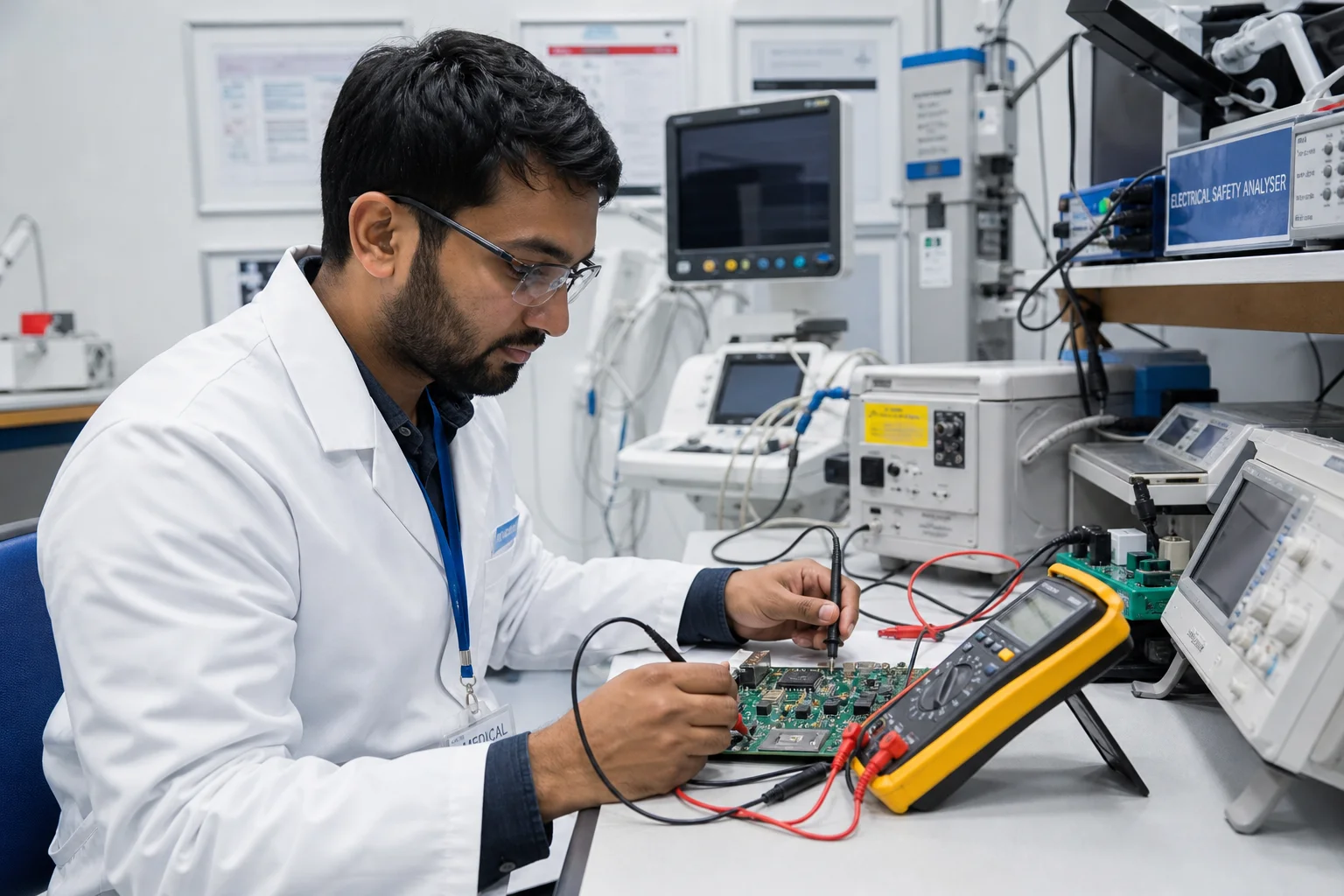
To prevent clinical hardware breakdown, hospital executives and procurement directors must understand the operational failure points that lead to equipment decommission:
Modern diagnostic and life-support devices contain sensitive microprocessors, digital signal processors (DSPs), and high-voltage circuit boards. In many developing regions, municipal electrical grids suffer from persistent brownouts, voltage spikes (ranging from 160V to 280V on nominal 220V lines), and frequency fluctuations. Without industrial-grade wide-range voltage stabilization and dual-conversion online uninterruptible power supply (UPS) systems, sensitive power supply units (SMPS) and flat-panel detectors suffer catastrophic dielectric breakdown within months of deployment.
Clinical operating environments in tropical developing nations frequently lack 24/7 central HVAC climate control. Ambient humidity exceeding 85% accelerates oxidation on electronic circuit connectors and optical prisms in laparoscopes and surgical microscopes. Concurrently, airborne dust ingress clogs internal ventilator cooling fans and X-ray generator heat exchangers, triggering thermal shutdown sensors and premature component failure.
The most fatal vulnerability in conventional medical device importing is the absence of long-term original spare parts availability. When a trading middleman ceases business, or when a factory alters circuit designs without backward compatibility, a single damaged sensor cable, worn peristaltic pump tube, or blown fuse board can render a $30,000 anesthesia machine permanently inoperable. Hospitals often wait 4 to 8 months for imported spare parts, during which time clinical service halts and patient care suffers.
Overcoming equipment mortality requires a proactive, three-tier engineering protocol implemented before goods depart the manufacturing facility:
┌────────────────────────────────────────────────────────┐
│  Tier 1: Pre-Shipment 100% Bench Testing & Calibration │
│  (Burn-in stress testing, safety audits, TUV/SGS check)│
└───────────────────────────┬────────────────────────────┘
                            ▼
┌────────────────────────────────────────────────────────┐
│  Tier 2: Tropical Climate & Grid Hardening             │
│  (Integrated AVR, conformal PCB coating, dual UPS)     │
└───────────────────────────┬────────────────────────────┘
                            ▼
┌────────────────────────────────────────────────────────┐
│  Tier 3: 5–8 Year Guaranteed Lifecycle Spare Parts     │
│  (Modular components, regional buffer stock, 24h video)│
└────────────────────────────────────────────────────────┘
Equipment reliability must be verified through empirical testing prior to export packing:
48-Hour Electronic Burn-In: Running patient monitors, anesthesia monitors, and ultrasound processors under continuous high-load cycles to expose infant-mortality component defects before overseas shipping.
Electrical Safety Testing (IEC 60601-1): Verifying chassis earth leakage current, patient auxiliary leakage current, and dielectric withstand voltage to ensure total operator and patient safety.
Third-Party Inspection Verification: Facilitating voluntary pre-shipment inspections through independent testing bodies (such as TUV Rheinland, SGS, or Bureau Veritas), providing certifying conformity reports to hospital boards before financial disbursements.
Medical devices engineered for stable European or North American hospital environments must be adapted for emerging market conditions:
Conformal Circuit Coating: Applying moisture- and fungus-resistant silicone conformal coatings to printed circuit boards (PCBs) to prevent humidity-induced short circuits.
External Heavy-Duty Voltage Regulators: Bundling precision servo-motor or electronic automatic voltage regulators (AVR) with wide input ranges (140V–260V AC) for all primary diagnostic units.
Washable Dust Filtration: Implementing quick-release, washable air filters over intake vents to protect internal electronic cooling systems.
Sustainable medical procurement contracts must mandate written spare parts availability guarantees:
Modular Replacement Architecture: Prioritizing medical devices built on standardized modular sub-assemblies (e.g., plug-and-play power boards, standard pneumatic valve blocks, detachable sensor modules) that allow local hospital biomedical technicians to replace failed components with simple hand tools.
Emergency Replacement Consumables Kits: Including critical 2-year maintenance packages (backup O2 sensors, replacement filter sets, patient cables, seals, and fuses) inside the initial ocean container shipment.
The clinical and financial divergence between transactional spot brokering and Maya Medical's comprehensive lifecycle engineering model is illustrated in the operational matrix below:
Operational Parameter | Low-Cost Spot Broker / Trading Agent | Maya Medical Sustainable Lifecycle Framework |
|---|---|---|
Quality & Safety Audit | Spot visual check or arbitrary factory sample inspection | 100% full functional electronic bench testing + optional TUV/SGS third-party audit |
Power Grid Protection | None; purchasing hospital must independently source third-party AVRs | Tailored industrial wide-range automatic voltage stabilizers & medical UPS bundled |
Spare Parts Commitment | 6 to 12 months basic warranty; zero availability commitments post-sale | Guaranteed 5 to 8 years original factory spare parts supply contract commitment |
Biomedical Training | Generic brief English manual without diagnostic wiring schematics | Multilingual step-by-step video installation guides + live engineer video guidance |
Regional Service Infrastructure | Zero overseas presence; all inquiries routed through slow email queues | Overseas direct branch & 3 operational showrooms (Madagascar) with regional technicians |
Urgent Engineering Response | Several days to weeks; zero accountability after delivery | 15-minute initial response window via dedicated WhatsApp engineering desk (+86-189-2504-4116) |
By embedding rigorous electrical protection, modular replacement components, and long-term spare parts guarantees directly into the commercial contract, healthcare facilities protect their capital investment and ensure continuous clinical service delivery for patients.
With 14 years of dedicated cross-border medical export experience serving over 1,000 healthcare projects globally, Maya Medical has built an engineering ecosystem specifically designed to eradicate the medical equipment graveyard:
Deep Multidisciplinary Technical Leadership: A dedicated biomedical engineering department staffed by technical specialists with over 20 years of hands-on field servicing experience, supplemented by an active advisory board of 15 clinical physician consultants.
Permanent Overseas Presence in Madagascar: Maya Medical maintains an established overseas subsidiary and 3 fully equipped medical showrooms in Madagascar, stocking essential original spare parts, demonstration diagnostic equipment, and regional field support technicians for rapid dispatch.
Practical Preventive Maintenance Protocols: Comprehensive video training libraries illustrating step-by-step uncrating, sterile assembly, daily electronic calibration, probe disinfection, and scheduled filter replacement for local hospital technical staff.
Rapid WhatsApp Diagnostic Channel: Direct engineering access via WhatsApp (+86-189-2504-4116) allowing biomedical technicians to stream live equipment diagnostic screens and circuit readings for instant troubleshooting guidance.
Healthcare facilities should order a 2-year preventive maintenance kit comprising: replacement power supply boards, rechargeable backup batteries, oxygen sensors (for anesthesia and ventilators), ultrasound probe acoustic lenses, patient monitor cables (ECG lead wires, SpO2 sensor probes, NIBP cuffs), and replacement silicone seal gaskets.
Maya Medical provides 24-hour direct video engineering support via WhatsApp (+86-189-2504-4116). Hospital technicians can share video of the error display and internal diagnostic logs; Maya Medical's senior biomedical engineers guide local staff through circuit tracing, component testing, and software resets in real time.
Yes. Maya Medical maintains archival component inventories and engineering schematics for all equipment delivered over the past 8 to 10 years, ensuring that hospital clients can secure compatible replacement modules and upgrade kits long after initial deployment.


