

Views: 0 Author: Maya Medical Clinical Editorial Team Publish Time: 2026-10-26 Origin: Site


African healthcare infrastructure is experiencing a structural transformation in late 2026, marked by the operational rollout of the African Pooled Procurement Mechanism (APPM) led by the Africa Centres for Disease Control and Prevention (Africa CDC) alongside widespread hospital modernization initiatives across Sub-Saharan Africa. For hospital directors, healthcare ministry procurement committees, engineering contractors (EPC), and medical equipment distributors, this development reshapes how clinical devices are sourced, evaluated, and deployed. Navigating this evolving market requires moving beyond fragmented, single-device purchasing toward standardized, turnkey departmental packages that guarantee regulatory compliance, clinical durability, and long-term after-sales support.
In October 2026, Africa CDC announced the full operational transition of the African Pooled Procurement Mechanism (APPM) across African Union member states. Initiated to resolve the continent-wide challenge of fragmented, high-cost medical purchasing, the APPM aggregates procurement volume across public health institutions and national health ministries. Historically, African healthcare institutions paid up to 30% to 50% more for identical diagnostic equipment and hospital hardware compared to global benchmarks due to small order volumes, multilayered distributor markups, and complex logistics corridors.
The operationalization of pooled procurement creates a unified purchasing channel that enables participating African healthcare authorities to negotiate directly with certified manufacturers. By bundling requirements for essential hospital departments—such as radiology suites, intensive care units (ICUs), and operating theatres—the mechanism allows public and private hospitals to achieve economies of scale previously reserved for multinational healthcare networks.
Furthermore, pooled procurement mitigates supply chain volatility. Bulk volume contracts incentivize primary manufacturers to establish dedicated technical buffer stocks, transparent factory pricing, and priority shipping schedules for African destinations, drastically reducing standard equipment procurement lead times from 6–9 months down to 4–8 weeks.
Beyond pricing advantages, the APPM accelerates the harmonization of medical device regulatory standards across regional economic communities (ECOWAS, EAC, SADC). Participating healthcare facilities now prioritize suppliers with verifiable international certifications, specifically ISO 13485 quality management systems, CE markings, and comprehensive factory conformity declarations.
This regulatory convergence eliminates substandard equipment and counterfeit consumables that previously entered secondary distribution channels. For procurement officers, partnering with verified manufacturers who provide transparent clinical documentation, pre-shipment inspection certificates, and technical compliance sheets has become the primary prerequisite for hospital tender qualification.
Parallel to institutional procurement reforms, 2026 marks an unprecedented surge in hospital construction and clinical upgrading projects across Sub-Saharan Africa. Driven by rapid demographic growth, rising non-communicable disease (NCD) burdens, and national health development plans (such as Nigeria's Healthcare Renewal Initiative, Kenya's Universal Health Coverage programs, and hospital expansion projects across Rwanda, Côte d'Ivoire, and Angola), capital investment is flowing into both secondary referral centers and community healthcare facilities.
Healthcare infrastructure investment in Africa is no longer restricted to tier-one tertiary teaching hospitals in national capitals. A noticeable development in 2026 is the expansion of regional district general hospitals and specialized private clinics funded through public-private partnerships (PPPs) and international development facilities. In West Africa alone, dozens of multi-story hospital complexes are entering commissioning stages, each requiring complete outfitting spanning outpatient consultation, imaging diagnosis, clinical laboratories, surgical wings, and inpatient wards.
This construction boom creates acute demand for comprehensive, turnkey hospital equipment packages. Project developers and general contractors face rigid project completion deadlines, making decentralized purchasing from dozens of separate vendors a major operational liability.
Hospital clinical directors are allocating capital budgets toward core revenue-generating and life-saving departments. Priority procurement categories in the current market cycle include:
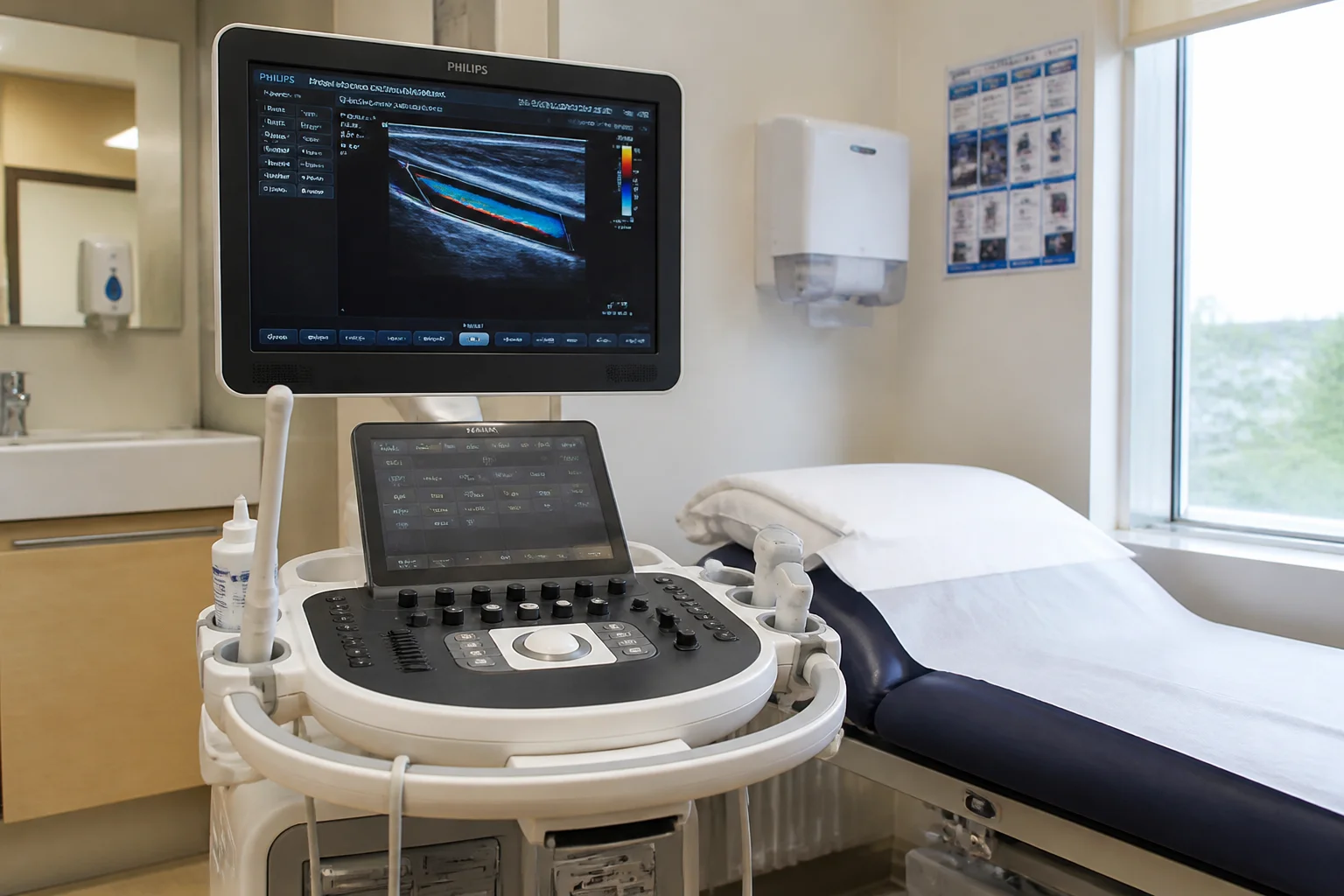
Medical Imaging & Radiology: Digital Radiography (DR) X-ray systems, Mobile C-Arm systems for orthopedic and trauma surgery, and trolley-based Color Doppler Ultrasound systems with versatile cardiac, convex, and linear probes.
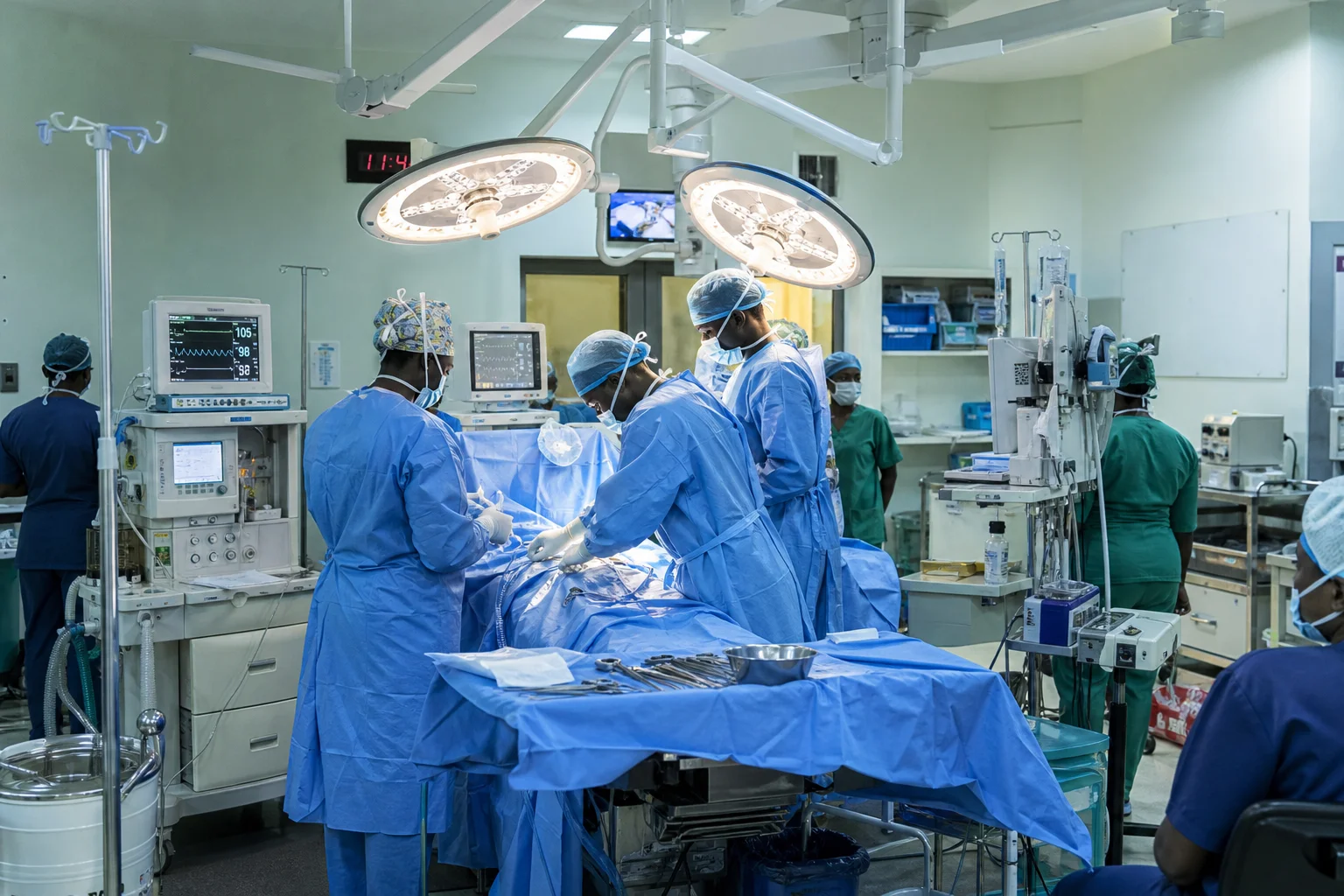
Surgical Suites & Operating Rooms: Multi-functional electric operating tables, LED surgical shadowless lamps, high-frequency electrosurgical units (ESU), and integrated medical gas supply infrastructure.
Intensive Care & Emergency Units: Multi-parameter patient vital signs monitors (ECG, SpO2, NIBP, EtCO2), ICU ventilators with invasive and non-invasive modes, syringe pumps, infusion pumps, and automated external defibrillators (AEDs).
Clinical Laboratory Diagnostics: Automated hematology analyzers, clinical chemistry analyzers, and biological safety cabinets to ensure rapid on-site pathology turnaround.
A decisive trend among African hospital procurement committees in late 2026 is the strategic transition from single-unit equipment purchasing to integrated departmental solutions. When health facilities purchase an anesthesia machine from one supplier, patient monitors from a second, and surgical tables from a third, clinical teams frequently encounter electrical incompatibility, uncoordinated warranty periods, missing connection accessories, and fragmented after-sales accountability.
Turnkey department sourcing resolves these systemic bottlenecks by placing single-source responsibility on one reputable medical equipment manufacturer or solution provider. Under a turnkey procurement model:
Integrated Engineering Compatibility: Power specifications (voltage stability, frequency matching, uninterruptible power supply needs), medical gas connectors, and data interfaces (DICOM / HL7 interoperability) are engineered and pre-tested prior to export.
Consolidated Logistics and Freight Savings: All department components are packed, palletized, and containerized together, cutting international ocean freight charges by up to 25% and dramatically simplifying customs clearance at African ports (e.g., Lagos, Mombasa, Tema, Abidjan).
Synchronized Commissioning and Clinical Training: Installation teams or remote engineering specialists guide the local biomedical team through simultaneous installation, initial calibration, and clinical user training in one structured phase.
The following matrix illustrates the standard turnkey equipment configuration required for a modern 50-to-100-bed African district general hospital project:
Hospital Department | Core Equipment Specification | Typical Deployment Quantity | Primary Clinical Function |
|---|---|---|---|
Radiology & Medical Imaging | 500mA Fixed Digital Radiography (DR) System + Mobile C-Arm X-Ray + 4D Trolley Color Doppler Ultrasound | 1 DR unit, 1 C-Arm, 2 Ultrasound units | Routine chest/bone imaging, surgical guidance, obstetrics, cardiology |
Surgical Operating Suite | Electric Hydraulic Operating Table + Dual-Dome LED Surgical Light + Anesthesia Workstation with Ventilator + High-Frequency Electrosurgical Unit | 2 Complete Suites per 50 beds | General surgery, cesarean sections, orthopedic operations, trauma repair |
Intensive Care Unit (ICU) | 12-Inch Multi-Parameter Patient Monitors + Invasive/Non-Invasive ICU Ventilators + Syringe & Infusion Pumps | 6 to 10 ICU Bed Sets | Continuous patient monitoring, mechanical respiratory support, targeted drug infusion |
Inpatient & Emergency Ward | 5-Function Electric Hospital Beds + Emergency Crash Carts + Defibrillator + Spot-Check Vital Signs Monitors | 50–100 Beds, 4 Crash Carts | Post-operative recovery, acute patient stabilization, vital parameter checks |
Clinical Laboratory | 3-Part / 5-Part Auto Hematology Analyzer + Semi-Auto Biochemistry Analyzer + Centrifuge + Microscope | 1 Complete Laboratory Setup | Blood counts, liver/kidney function panels, malaria and infection screening |
Procurement committees in African healthcare are increasingly scrutinizing the long-term reliability and manufacturing credibility of overseas suppliers. Medical equipment is an active clinical investment expected to operate uninterrupted for 7 to 10 years in environments characterized by fluctuating power grids, ambient humidity, and heavy patient throughput.
Reliable medical exporters distinguish themselves by conducting rigorous factory-level pre-shipment testing. Every X-ray tube, ultrasound transducer array, and anesthesia pneumatic circuit must undergo continuous stress testing and electronic calibration before packing.
Providing pre-shipment video verification, serial number tracking, and comprehensive technical factory test reports empowers hospital engineering directors to approve shipments with complete peace of mind, knowing that devices arrive in Africa ready for immediate clinical commissioning.
The true test of an equipment supplier begins after installation. In developing healthcare markets, the lack of original spare parts has historically turned valuable medical hardware into idle machinery. Forward-thinking manufacturers maintain dedicated spare parts availability guarantees (covering power boards, sensor cables, valves, and transducer probes) for a minimum of 5 to 8 years post-sale.
Combined with dedicated WhatsApp and online video engineering support that operates within African working time zones, clinical teams can resolve operational questions or diagnostic calibration requirements within hours rather than waiting weeks for overseas technical delegations.
With 14 years of specialized cross-border medical export experience and a proven track record spanning more than 1,000 completed hospital, clinic, and diagnostic laboratory projects globally, Guangzhou Maya Medical Equipment Co., Ltd. (Maya Medical) stands as a dedicated partner for African healthcare expansion.
Maya Medical provides comprehensive, factory-direct turnkey packages tailored to the unique clinical and environmental requirements of African healthcare facilities.
From national government hospital tenders to privately owned specialty clinics across Nigeria, Kenya, Ghana, Rwanda, the DRC, and Côte d'Ivoire, Maya Medical delivers verified clinical equipment engineered for durability and clinical precision:
Diagnostic Radiology: High-frequency digital X-ray machines, mobile C-Arms, and trolley/portable Color Doppler ultrasound systems designed for crystal-clear diagnostic imaging.
Surgical & Life Support: Advanced anesthesia workstations, ICU ventilators, multi-parameter patient monitors, electric operating tables, and LED surgical lamps.
Specialty Disciplines: Dental treatment units, laboratory diagnostic machines, ophthalmic examination instruments, and dedicated veterinary devices.
Maya Medical's experienced engineering and export team assists healthcare clients at every stage of project development:
Customized Bill of Quantities (BOQ): Reviewing hospital architectural blueprints and clinical service goals to provide tailored, cost-effective equipment item lists within 24 hours.
Strict Quality Assurance: Full compliance with CE, ISO 13485, and international medical safety certifications.
Turnkey Logistics & Documentation: Comprehensive export handling including Certificate of Conformity (COC/SONCAP/PVoC), bill of lading, and secure export crating for sea and air freight.
Dedicated After-Sales Commitment: Real-time engineering guidance via WhatsApp (+86-189-2504-4116), remote video installation support, and genuine original spare parts assurance.
Whether outfitting a new regional hospital, upgrading an existing surgical wing, or bidding on government healthcare tenders under the African Pooled Procurement Mechanism, Maya Medical provides the reliable, one-stop equipment solutions modern African healthcare demands.
The African Pooled Procurement Mechanism (APPM) is an initiative established under the leadership of Africa CDC and the African Union to aggregate demand for essential medical products, diagnostics, and equipment across African countries. By consolidating volume, the APPM lowers acquisition costs, harmonizes regulatory standards, and improves supply chain security for healthcare facilities across the continent.
A standard district general hospital requires integrated departmental packages covering: Diagnostic Radiology (Digital X-ray and Color Doppler Ultrasound), Surgical Theatres (Operating Table, Surgical Light, Electrosurgical Unit, and Anesthesia Workstation), Intensive Care (ICU Ventilators, Multi-Parameter Patient Monitors, and Infusion Pumps), and Inpatient Wards (Electric Hospital Beds and Emergency Crash Carts).
Healthcare institutions should partner directly with verified one-stop medical equipment solution manufacturers who offer written spare parts availability guarantees (minimum 5–8 years), standardized international certifications (CE, ISO 13485), and direct online technical support via WhatsApp or video calling to provide real-time troubleshooting and installation guidance.


